Products
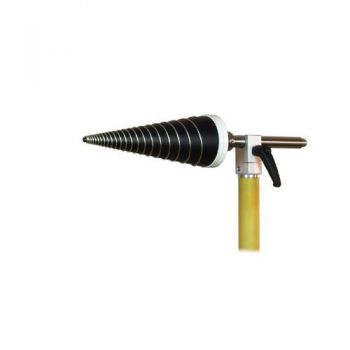
- Conical Logarithmic Spiral Antenna
- The CLSA 0110 offers circular polarisation over approx. one decade up to microwave frequencies.
- Frequency Range: 1 - 10 GHz
- Polarization: either LHCP or RHCP (Left or right hand circular polarisation)
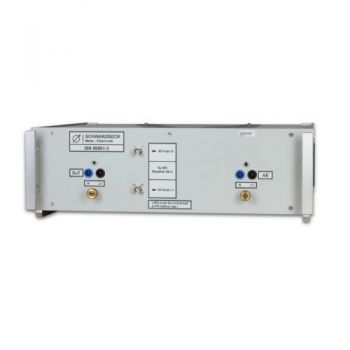
- Impedance stabilization network (ISN)
- For measurements of unsymmetrical disturbance voltage on equipment for power line communication (PLC)
- Acc. to EN 50561-3, Annex B.
list of current equipment available from inventory.
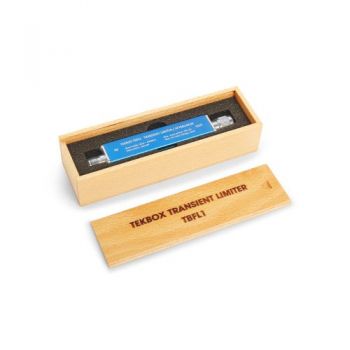
The TBFL1 is a combined transient limiter/attenuator/ high pass filter, designed to provide optimum protection of spectrum analyzer or measurement receiver inputs when carrying out conducted noise measurements or other measurements where the input levels cannot be predicted with certainty or where accidental overloads may occur.
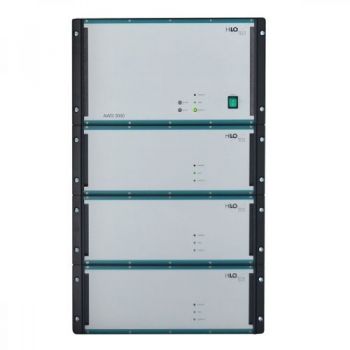
The CAR arbitrary waveform generator 3000 is a compact EMC testing system for performing voltage variations on supply lines of vehicles. The system strictly complies with the international standards and manufacturer standards that describe phenomena on the power supply of vehicles. Thus, the CAR arbitrary waveform generator 3000 is the optimal voltage power source for battery simulation up to 70V. It can simulate pulse 2b, pulse 4, starting profile, superimposed alternating voltage and others, up to a battery current of 100A.
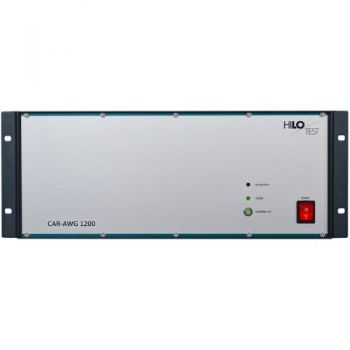
The CAR arbitrary waveform generator 1200 is a compact EMC testing system for performing voltage variations on supply lines of vehicles. The system strictly complies with the international standards and manufacturer standards that describe phenomena on the power supply of vehicles. Thus, the CAR arbitrary waveform generator 1200 is the optimal voltage power source for battery simulation up to 70V. It can simulate pulse 2b, pulse 4, starting profile, superimposed alternating voltage and others, up to a battery current of 40A.
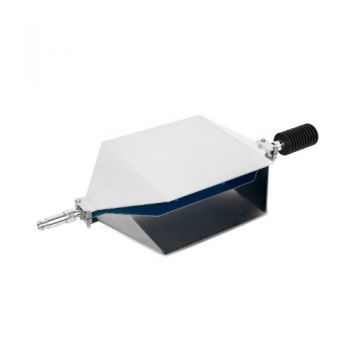
Radiated emission tests are typically carried out in anechoic chambers, using antennas to pick up the radiated signals. Due to bandwidth limitations, several antennas are required to cover the complete frequency range. Furthermore, it requires much space and the cost of the equipment for a standard conformant setup is immense.
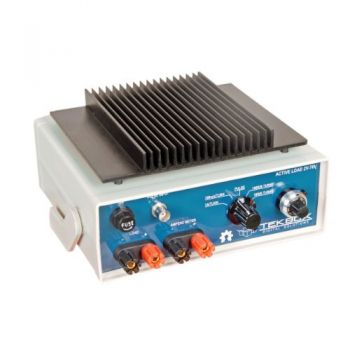
The TBOH02 is a self-powered, precision active load. It does not need a separate supply voltage and operates as low as 2V. Its features include constant resistance and constant current mode. A 10 turn potentiometer with dial, a range switch and a precision reference enable the accurate setting of current or resistance. Furthermore, it can be controlled by an external voltage.
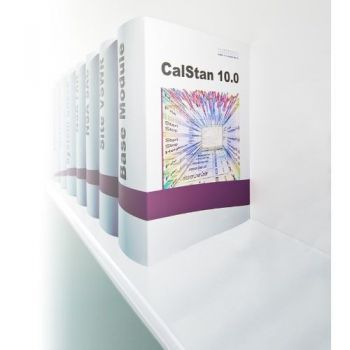
CalStan 11 is a software tool for automation of radio frequency (RF) calibrations and measurements of EMC test sites and test equipment. The software controls the instruments via GPIB bus and LAN, reads the measurement values and computes the results. A modular concept with measurement plug-ins allows customization according to the test lab requirements.
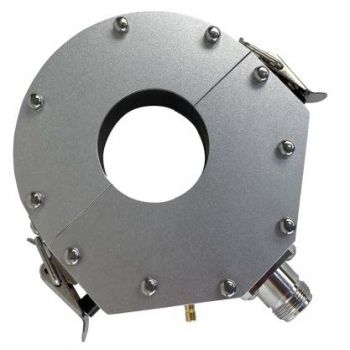
BCI-P1 Bulk Current Injection Probe 10 kHz – 400 MHz - Meets specifications of ISO 11452-4:2005 and IEC 61000-4-6 - Frequency range from 1 MHz up to 400 MHz - Designed for automotive BCI testing - Low insertion loss (1MHz - 400MHz) to test bellow 1MHz (IEC/DO/MIL) see CDN BCI-P1_MT-1