
CISPR 22 (EN 55022)
OTHER PRODUCTS IN THE SAME STANDARD:
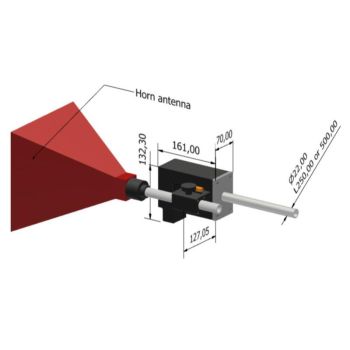
Key Benefits
- Converts existing antenna masts into boresight-capable systems
- Maintains precise antenna alignment to the EUT during testing
- Improves EMC and RF test repeatability
- Adjustable for 1 m to 10 m test distances
- Supports custom EUT reference heights
- Lightweight and easy to install
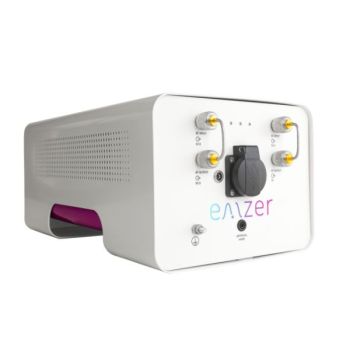
EMI Measurements:
- FFT-based dual-channel receiver
- According to CISPR16-1-1
- Peak, Quasi-Peak, and Average Detectors
- Resolution Bandwidth Filters of 200 Hz, 9 kHz, and 120 kHz (CISPR), and 1 kHz and 10 kHz (MIL)
- The fastest receiver in the market: Line and Neutral measurements with the 3 detectors simultaneously (6 simultaneous measurements)
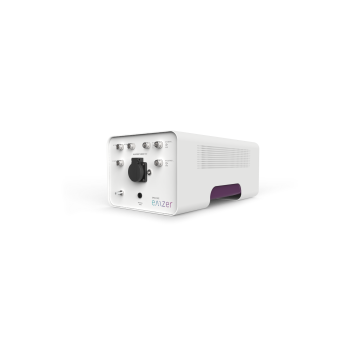
EMI Measurements:
- FFT-based dual-channel receiver
- According to CISPR16-1-1
- Peak, Quasi-Peak, and Average Detectors
- Resolution Bandwidth Filters of 200 Hz, 9 kHz, and 120 kHz (CISPR), and 1 kHz and 10 kHz (MIL)
- The fastest receiver in the market: Line and Neutral measurements with the 3 detectors simultaneously (6 simultaneous measurements)
- Measure 4 lines of 3 phase LISN
- The picture is shown with internal LISN [EMSCOPE RX4 LZ2]
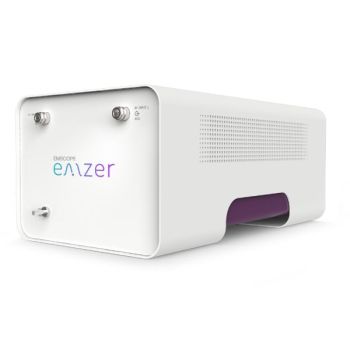
EMI Measurements:
- FFT-based dual-channel receiver
- According to CISPR16-1-1
- Peak, Quasi-Peak, and Average Detectors
- Resolution Bandwidth Filters of 200 Hz, 9 kHz, and 120 kHz (CISPR), and 1 kHz and 10 kHz (MIL)
- The fastest receiver in the market: Line and Neutral measurements with the 3 detectors simultaneously (6 simultaneous measurements)
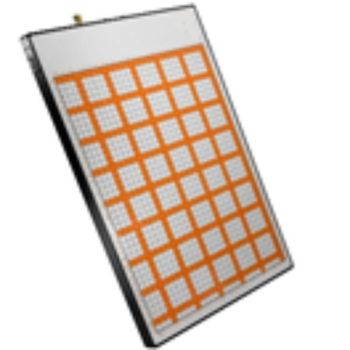
- Capability:
- Spectral scan, spatial scan, peak-hold, continuous scanning, spectral and spatial comparison, scripting, limit lines, and report generation.
- Spatial scan time:
- Continuous real-time or sub-second single scan for the entire scan area is dependent on spectrum analyzer performance.
- Spectral scan time:
- 45 seconds for L 10 cm x W 10 cm (L 4” x W 4”) PCB with a 100 MHz span and 100 kHz RBW. Scanning area, span, and RBW are user-selectable within spectrum analyzer specifications
- EMViewer Software
- We recommend you use the EMViewer software for best results. A Yearly subscription or a once-off purchase is available.
- Supported operating systems: Windows 10®
- Supported CAD overlays: Standard Gerber© RS274x format and HPGL format
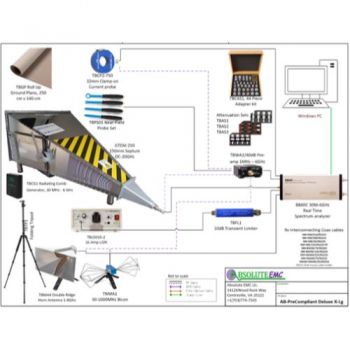
Absolute EMC has designed low-cost pre-compliance systems to meet a wide range of RF emissions and immunity needs. Some form of pre-complaint testing is a must for any company that needs to demonstrate their product for EMC compliance. This enables companies to be responsive when issues happen and to also be proactive before going to the lab to better your chances of passing the first time.