Products
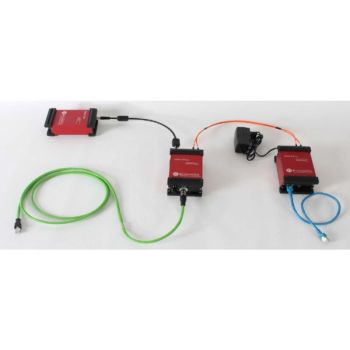
This optical device is used for the bidirectional optical transmission of ethernet signals with a transmission rate of 1 GBit/s. It is downward compatible to 100BaseT and 10BaseT (automatically detected). The system consists of two identical transceivers supplied by batteries and a duplex 62.5/125µm-multimode optical cable.
A new type of connector is available now: The M12 connector (MMT471A315, counterpart MNF881A315-0001) by Metz Connect was integrated into our optical transmitter for Ethernet signals optoLAN, as well as optoLAN-Gb. Therefore, these devices are even fitter for tests of electromagnetic compatibility.
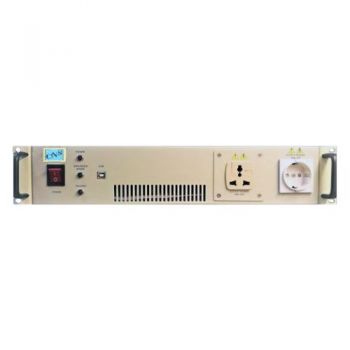
- Full compliant system meeting the requirements
- IEC 61000-3-2 Harmoinc Emissions
- IEC 61000-3-3 Flicker Emissons
- USB controlled, Windows 10 compatible software included
- 16 Amp, 120, and 230 Voltages, 50/60Hz
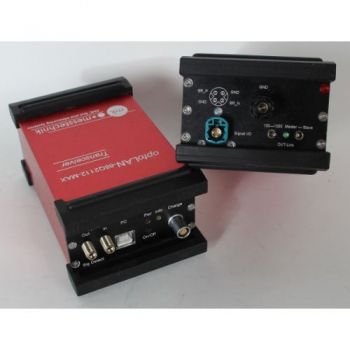
The Marvell® 88Q1010 solution is a single pair Ethernet physical layer transceiver (PHY). Our optoLAN-88Q1010 is suitable for EMC tests of devices with this kind of chipset. The standard connector is a 4 pole Rosenberger HSD to minimize the emission of our optical link.
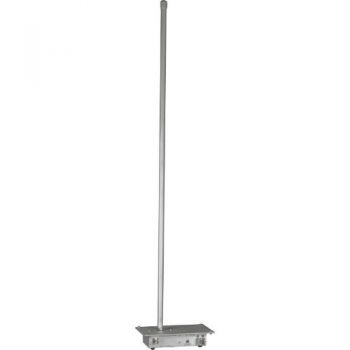
- Vertikal Active Rod Antenna
- 9 kHz - 30 MHz
- BNC
- reduced noise floor
- with mounting nut for AM 9144 and rechargeable battery
- Meeting requirements of MIL-STD-461, CISPR 25, and others
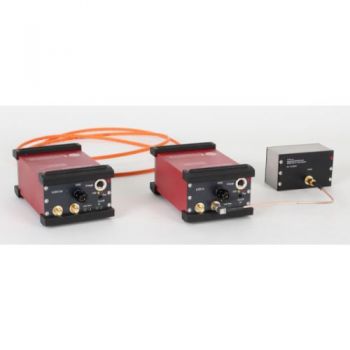
LVDS (Low-voltage differential signaling) systems are tailored to each individual application. We work closely without clients to understand and develop a perfect fit product that will have no issues once implemented. We have the most experience in the industry developing and delivering such systems. See below examples of what we have offered.
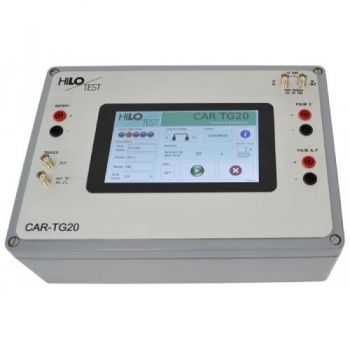
The transient generator CAR-TG 20 is designed according to strict specifications of Ford standards. As per standards FORD FMC1278 and EMC-CS-2009.1 the transient tests defined in RI130, CI220 and CI 260 are generated by CAR-TG20. By that is meant pulse forms: A1, A2-1, A2-2, C-1, C-2, and F.
Therefore, a specified 12VAC Potter & Brumfield relay as well as other parts defined by standard create pulses that are close to real appearing transients.
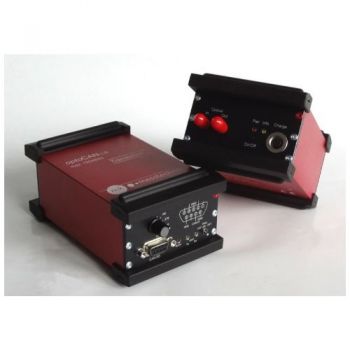
The optoCAN-LS system can be used for the bidirectional optical transmission of CAN optical transmitter for low speed-CAN signals with transmission rates of up to 125kbit/s. It consists of two identical battery supplied transceivers connected to each other with an optical fiber. With the optical transmission and the shielded case, the system is well equipped for EMI and EME tests.
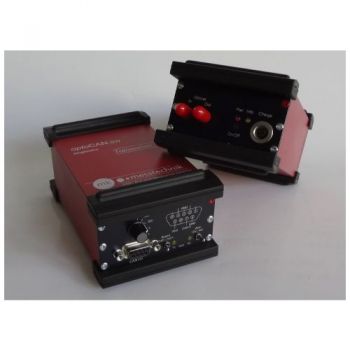
The optoCAN-SW system can be used for the optical transmission of single-wire CAN signals with transmission rates of up to 33kbit/s (max. 83kbit/s). It optical transmitter of single-wire CAN signals: optoCAN-SWconsists of two identical battery supplied transceivers connected to each other with an optical fiber. With the optical transmission and the shielded case, the system is well equipped for EMI and EME tests.
- Vertikal Active Rod Antenna
- 9 kHz - 30 MHz
- BNC
- reduced noise floor
- with mounting nut for AM 9144 and rechargeable battery
- Meeting requirements of MIL-STD-461, CISPR 25, and others
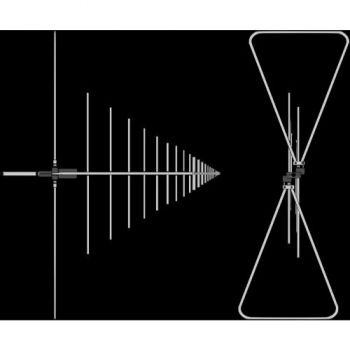
TRILOG Broadband Antenna, Combination antenna, Bicon+Log
- 30 MHz to 7 GHz
- 100 Watts
- Ideal Broadband antenna for Emissions measurements to CISPR 16 and many others