Products
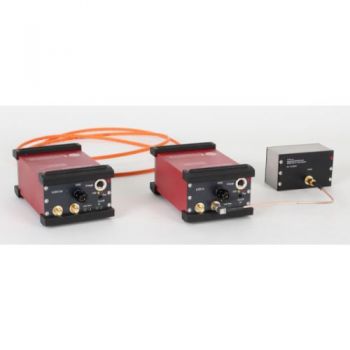
LVDS (Low-voltage differential signaling) systems are tailored to each individual application. We work closely without clients to understand and develop a perfect fit product that will have no issues once implemented. We have the most experience in the industry developing and delivering such systems. See below examples of what we have offered.
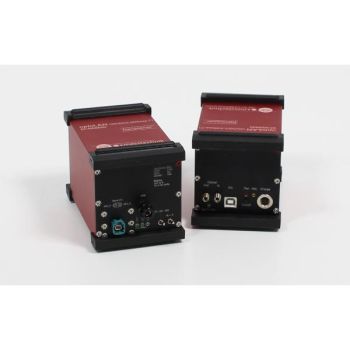
The optoLAN-10GBASE-T1 BCM89890 system is a digital bidirectional optical transmission device for automotive Ethernet LAN-10G/5G/2.5GBASE-T1 signals (switchable).Featuring Rosenberger H-MTD connectors, optical transmission, and a shielded case, it ensures reliable, interference-free performance for EMI and EME testing, proven in automotive EMC labs.
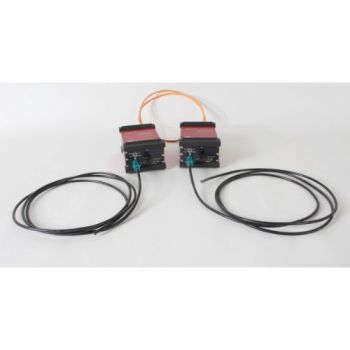
The optoLAN-100Base-T1
-MAX system can be used for the optical transmission of automotive ethernet signals with NXP© TJA1100© chipset (unshielded twisted pair UTP ethernet). The system can be set up with two identical transceivers or one side automotive ethernet and the other 100BaseT. With this setup, the link can be used as a media converter. The devices are supplied by internal batteries and connected with an optical fiber. The standard connector is a 4 pole Rosenberger HSD.
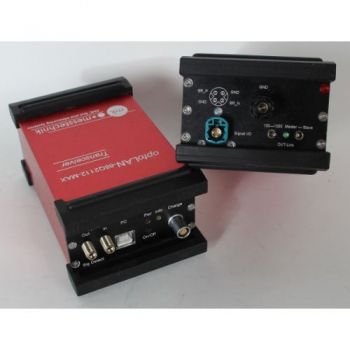
The Marvell® 88Q2112 solution is a single pair Ethernet physical layer transceiver (PHY) for 100/1000Base-T1 signals. Our optoLAN 100/1000Base-T1 88Q2112 is suitable for EMC tests of devices with this kind of chipset. The standard connector is a 4 pole Rosenberger HSD to minimize the emission of our optical link.
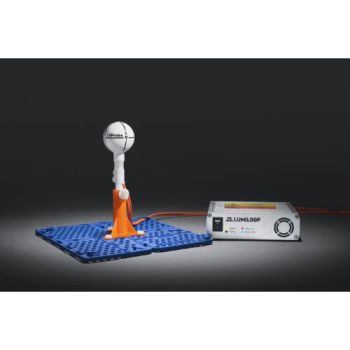
The LSProbe 2.0 Variant A Field Probe is a high-speed, high-accuracy, and high-dynamic range electric-field probe.
- Its standard frequency range of 9 kHz – 18 GHz. 1,000 V/m
- Best-in-class compensation of linearity, frequency, and temperature guarantees accurate measurements from less than 1 to at least 1,000 V/m.
- A dynamic range of 100 dB is achieved for many frequencies, enabling Field measurements at more than 10,000 V/m.
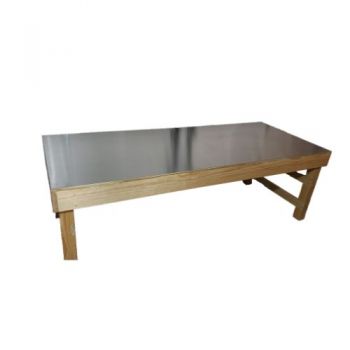
The Wood Test Table is a simple, inexpensive solution for your EMC testing. The table is built to be ship flattened to reduce shipping costs and easily assembled on site quickly. The picture is shown with a ground plane.
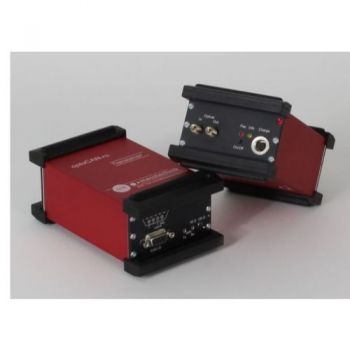
The optoCAN-FD system can be used for the bidirectional optical transmission of CAN-signals with transmission rates of up to 10 Mbit/s. It consists of two identical battery supplied transceivers connected to each other with an optical fiber. With the optical transmission and the shielded case, the system is well equipped for EMI and EME tests.
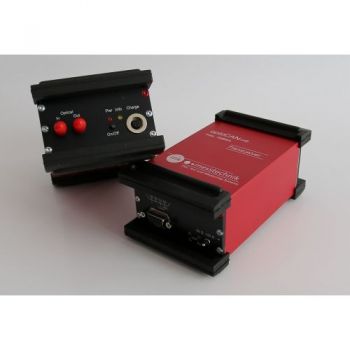
The optoCAN-HS system can be used for the bidirectional optical transmission of CAN signals with transmission rates of up to 1Mbit/s. It consists of two identical battery-supplied transceivers connected to each other with an optical fiber. The optical transmission and the shielded case make the system well equipped for EMI and EME tests. The optoCAN-FD is fully backward-compatible with HS and is highly recommended.
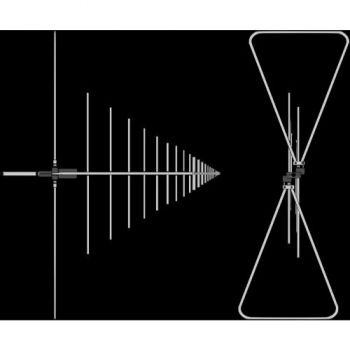
TRILOG Broadband Antenna, Combination antenna, Bicon+Log
- 30 MHz to 7 GHz
- 100 Watts
- Ideal Broadband antenna for Emissions measurements to CISPR 16 and many others
The Marvell® 88Q1010 solution is a single pair Ethernet physical layer transceiver (PHY). Our optoLAN-88Q1010 is suitable for EMC tests of devices with this kind of chipset. The standard connector is a 4 pole Rosenberger HSD to minimize the emission of our optical link.