Products
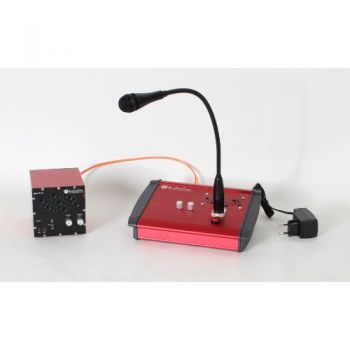
The dAV series includes not only the digital, optical transmission of camera signals (dAV-C), it can also transmit analog audio and/or video signals uni- or bidirectionally. Fields of application are e.g. the acoustical monitoring of engine speed or surveillance of an audio or video system in immunity tests. The main unit dAV is thus equipped with different options. The dimensions of the housing depends on the options chosen.
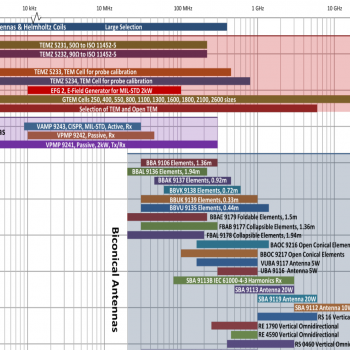
- Quick find for Absolute EMC antennas
- Run your mouse over the below images
- Click on what you want to see
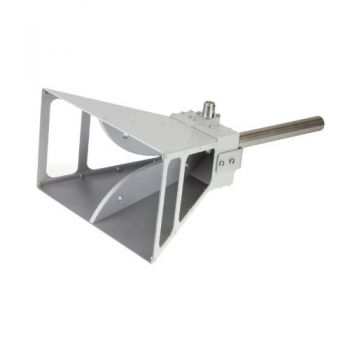
The broadband horn antenna BBHA 9120 D is a linear polarized double ridged horn antenna.
- (0.8) 1 GHz to 18 GHz
- N - female
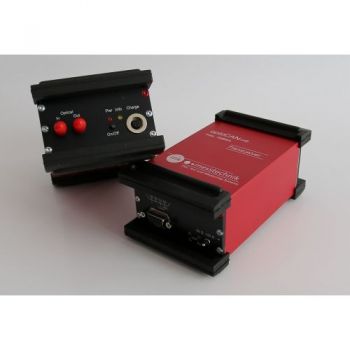
The optoCAN-HS system can be used for the bidirectional optical transmission of CAN signals with transmission rates of up to 1Mbit/s. It consists of two identical battery-supplied transceivers connected to each other with an optical fiber. The optical transmission and the shielded case make the system well equipped for EMI and EME tests. The optoCAN-FD is fully backward-compatible with HS and is highly recommended.
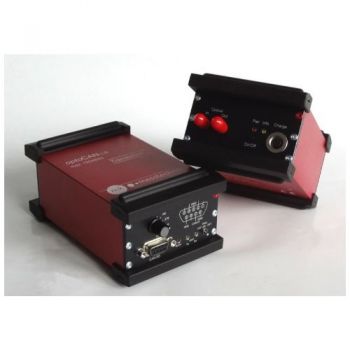
The optoCAN-LS system can be used for the bidirectional optical transmission of CAN optical transmitter for low speed-CAN signals with transmission rates of up to 125kbit/s. It consists of two identical battery supplied transceivers connected to each other with an optical fiber. With the optical transmission and the shielded case, the system is well equipped for EMI and EME tests.
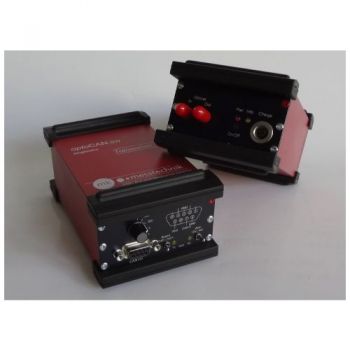
The optoCAN-SW system can be used for the optical transmission of single-wire CAN signals with transmission rates of up to 33kbit/s (max. 83kbit/s). It optical transmitter of single-wire CAN signals: optoCAN-SWconsists of two identical battery supplied transceivers connected to each other with an optical fiber. With the optical transmission and the shielded case, the system is well equipped for EMI and EME tests.
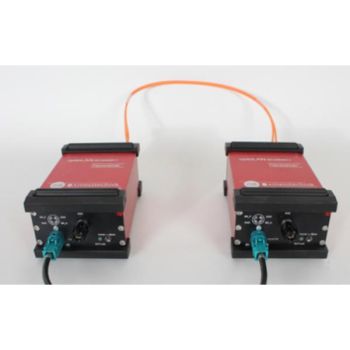
The optoLAN-BCM89811 system can be used for the optical transmission of automotive ethernet signals with Broadcom© BCM89811© and other 100BaseT1 chipsets. There are two setups available, T1 to T1 (standard) or T1 to Tx (with integrated media converter => optoLAN-BCM89811 -MC), see separate setup document. The standard connector is Rosenberger HSD (Z-coded).
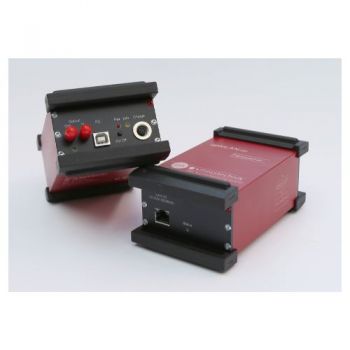
The optoLAN-100-MAX system can be used for the optical transmission of Ethernet (LAN-) signals with a data rate of up to 100Mbit/s (100BaseTx). The two identical transceivers are supplied by internal batteries and connected with an optical fiber. With the optical transmission and the shielded case, the system is well equipped for EMI and EME tests. The device is not downward compatible to 10BaseT. If you need this option you can get the optoLAN-Gb.
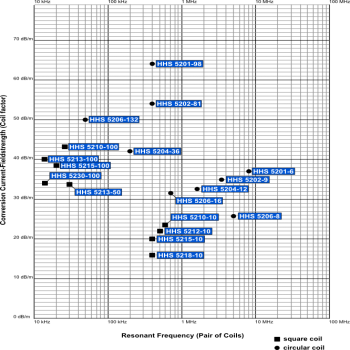
Helmholtz Coils Overview see below
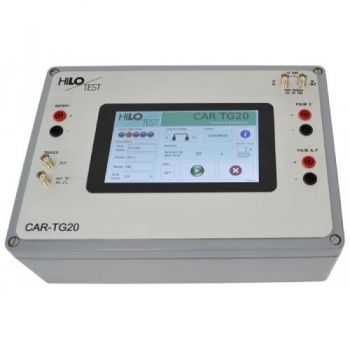
The transient generator CAR-TG 20 is designed according to strict specifications of Ford standards. As per standards FORD FMC1278 and EMC-CS-2009.1 the transient tests defined in RI130, CI220 and CI 260 are generated by CAR-TG20. By that is meant pulse forms: A1, A2-1, A2-2, C-1, C-2, and F.
Therefore, a specified 12VAC Potter & Brumfield relay as well as other parts defined by standard create pulses that are close to real appearing transients.