Products
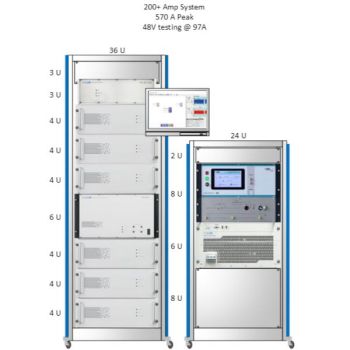
- Protocol reports
- Generation of waveforms with synchronous data acquisition
- Modular Expandable
- Individual Waveform Generation
- Standard Libraries included
- Unlimited Waveform size
- 2 different Waveforms synchronously
- DLL's for LabView, Vector CANoe / CAPL, C#, C++, ANSI C, Python, etc.
- Simulation of imported oscilloscope waveform
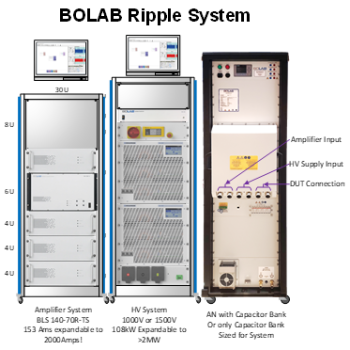
- Advanced Ripple Testing: Meets ISO 21498, LV123, VW 80300, Nissan MES PW 67602, Mazda, and emerging standards.
- Series Amplifier Integration: High accuracy ripple injection, minimal distortion, and enhanced safety.
- Waveform Versatility: Sine, square, trapezoidal, pulses, and triangle waveform generation.
- WaveMaster Software: Fast DUT impedance measurement, automated test sequences, and dynamic voltage/current control.
- High Power Capability: Ripple Voltage up to 100 Vpp, currents from 100A to 2000A+, and frequency range 10 Hz–300+ kHz.
- Future-Proof Design: Modular architecture for easy upgrades and adaptation to new standards.
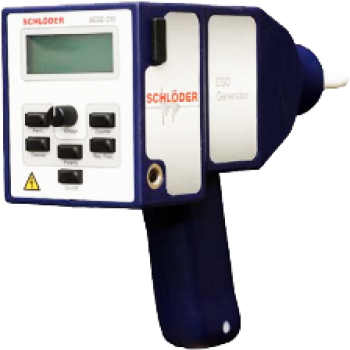
IEC / EN 61000-4-2 The test generator SESD 230 simulates electrostatic discharge as defined in the standard IEC / EN 61000-4-2. Depend on the Equipment Under Test (EUT) and the test set-up for laboratory tests the IEC standard shows two test methods; Test voltage max. 30,0 kV AIR und CON; Discharge impedance 150pF/330 Ohm (IEC); Battery or mains operation; Predefined tests, standard and other
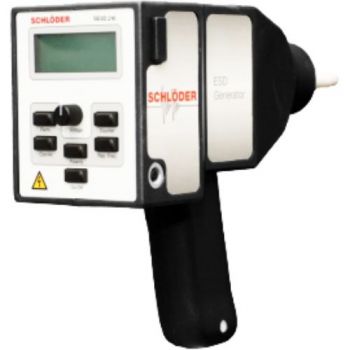
IEC / EN 61000-4-2 The test generator SESD 216 simulates electrostatic discharge as defined in the standard IEC / EN 61000-4-2. Depend on the Equipment Under Test (EUT) and the test set-up for laboratory tests the IEC standard shows two test methods; Air discharge (AIR) and Contact discharge (CON); Test voltage max. 16,5 kV AIR, max. 10,0 kV CON; Discharge impedance 150pF/330 Ohm (IEC); Battery or mains operation; Predefined tests - standard and other
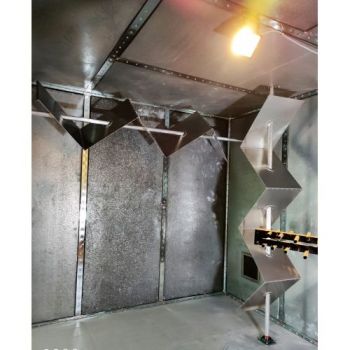
Any shielded room can be converted to a Reverberation chamber. This is an easy process where Aluminum panels and fixtures are fitters inside the chamber to raise the Q of the chamber. Special precautions are made to make sure all electrical bonding is done so connections do not Oxidize. Stirrers are installed based on customers' requirements. this can be 1, 2. or even more. The use of 2 stirrers perpendicular to each other is recommended but it is up to the user.
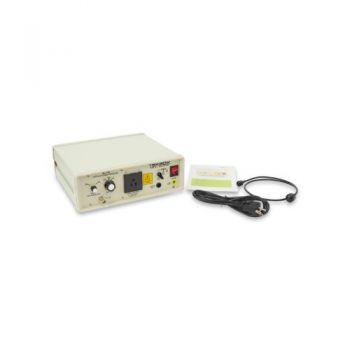
(Discontinued) The TBLC08 is a Line Impedance Stabilization Network for the measurement of line-conducted interference within the range of 9kHz to 30MHz, according to the CISPR16 standard. The device is designed for testing single phase, AC-powered equipment with supply voltages up to maximum 240V.
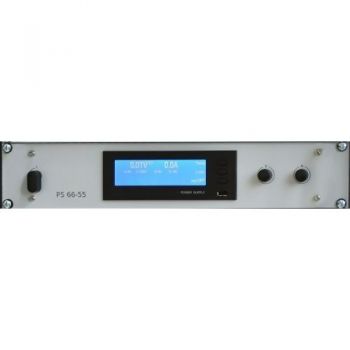
CAR LD-PS includes generation of pulses #5 / Test A and Test B. It is designed to be connected to the power supply interface of the CAR-SYS.
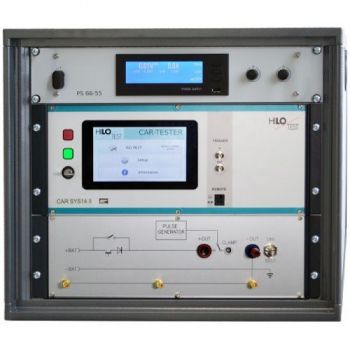
Power supply to expand the CAR-SYS 14 for the tests according to ISO 7637 and ISO 16750-2.
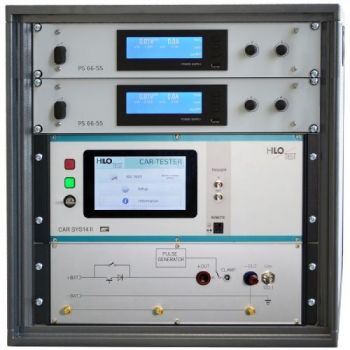
Power supply to expand the CAR-SYS 14 for the tests according to ISO 7637 and ISO 16750-2.
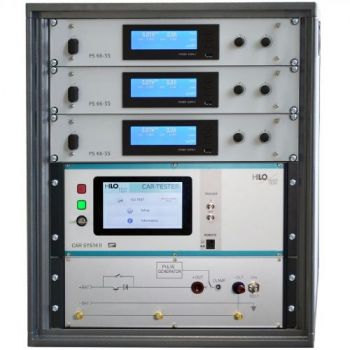
Power supply to expand the CAR-SYS 14 for the tests according to ISO 7637 and ISO 16750-2.