Products
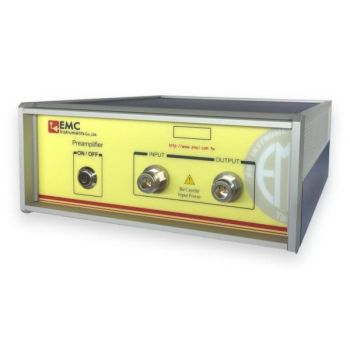
- 9 kHz - 1 GHz, 50dB Gain, 1.8dB N.F.
- Compensation long cable loss for EMI Measurement
- Improve system noise floor flatness
- High EMI performance
- High linearity LNA for EMI measurement
- High dynamic range
- Unconditionally Stable
- State-of-the-Art Technology
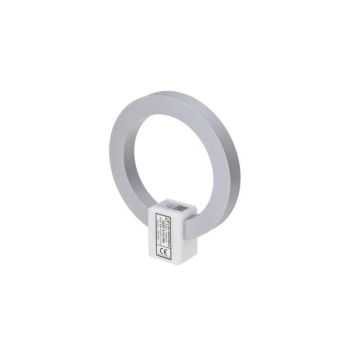
- Magnetic field monitoring loop
- 10 - 160 kHz
- Diam. 133mm
- turns 360
- Emissions testing
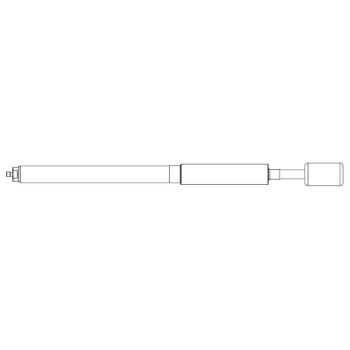
- Small biconical microwave antenna
- 10 - 40 GHz
- Compliant with CISPR 16-1-4 and ANSI C 63.25
- Typ VSWR < 2.5:1
- 50 W
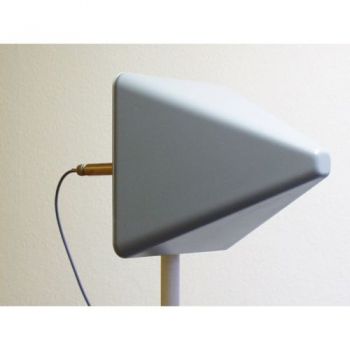
Stacked Logarithmic-Periodic Broadband Antenna for Linear polarised RX- and TX applications in the microwave frequency range.
- 1 - 18 GHz
- gain of 9 dBi
- Type N female 50 Watts
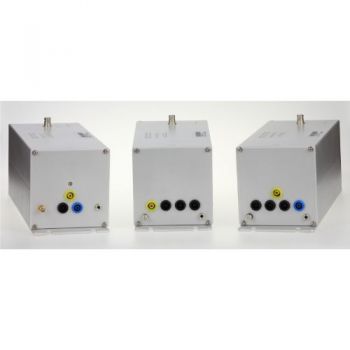
The Coupling- / Decoupling Networks are used to inject common-mode disturbances to Equipment under Test (EuT). Further, the CDNs provide sufficient decoupling between Auxiliary Equipment (AE) and disturbance signal. The requirements for CDN and their application are described in the standard IEC 61000-4-6 (Immunity to conducted disturbances, induced by radio-frequency fields). CDNs have a common mode impedance of 150 Ohm and are available for a multitude of cable types and connectors.
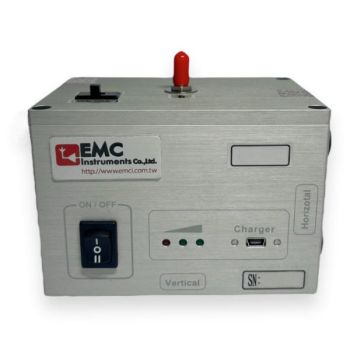
- Frequency Range:
- 50kHz - 30MHz for AC / DC LISN
- 10MHz / 100MHz - 7.5GHz for RE
- Frequency step:
- 30/500 kHz switchable for AC / DC LISN
- 10MHz / 100MHz step switchable for RE
- Includes: Generator, Charger, Storage case
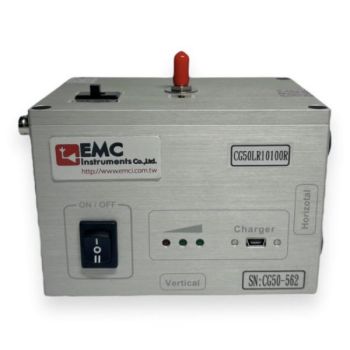
- Frequency Range:
- 50kHz - 108MHz for AC / DC LISN
- 50kHz - 30MHz with Monopole Antenna (CISPR 25)
- 30MHz - 1GHz (10MHz steps)
- 1 - 6GHz (100MHz steps)
- Frequency step:
- 50/500 kHz switchable for AC / DC LISN and Monopole Antenna
- 10MHz for 30MHz - 1GHz
- 100MHz step for 1 - 6GHz
- Includes: Generator, Charger, Storage case
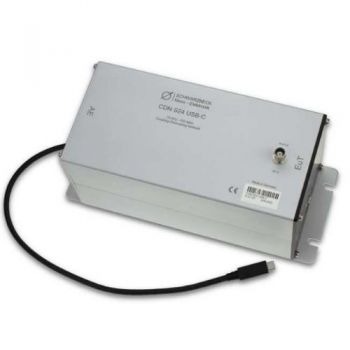
The Coupling- / Decoupling Networks are used to inject common-mode disturbances to Equipment under Test (EuT). Further, the CDNs provide sufficient decoupling between Auxiliary Equipment (AE) and disturbance signal. The requirements for CDN and their application are described in the standard IEC 61000-4-6 (Immunity to conducted disturbances, induced by radio-frequency fields). CDNs have a common mode impedance of 150 Ohm and are available for a multitude of cable types and connectors.
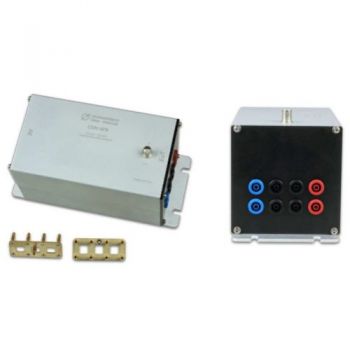
The Coupling- / Decoupling Networks are used to inject common-mode disturbances to Equipment under Test (EuT). Further, the CDNs provide sufficient decoupling between Auxiliary Equipment (AE) and disturbance signal. The requirements for CDN and their application are described in the standard IEC 61000-4-6 (Immunity to conducted disturbances, induced by radio-frequency fields). CDNs have a common mode impedance of 150 Ohm and are available for a multitude of cable types and connectors.
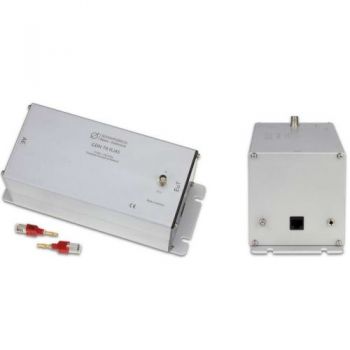
The Coupling / Decoupling Networks are used to inject common-mode disturbances to Equipment under Test (EuT). Further, the CDNs provide sufficient decoupling between Auxiliary Equipment (AE) and disturbance signal. The requirements for CDN and their application are described in the standard IEC 61000-4-6 (Immunity to conducted disturbances, induced by radio-frequency fields). CDNs have a common mode impedance of 150 Ohm and are available for a multitude of cable types and connectors.