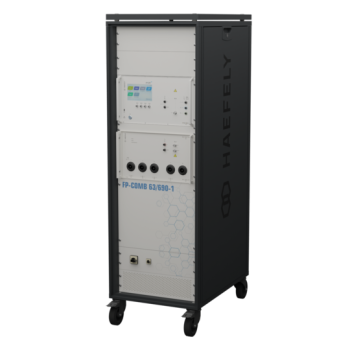
FP-COMB 63 / 125 / 200 A - 690 V AC Coupling / Decoupling Networks
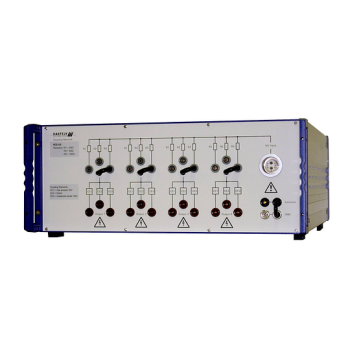
PCD 121 - 6.6 kV Surge Coupling Network for Symmetrical Lines
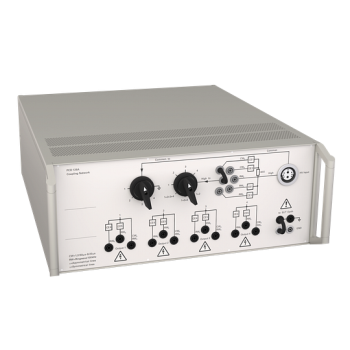
PCD 126A - 6.6 kV Surge and Ring-Wave Coupling Network
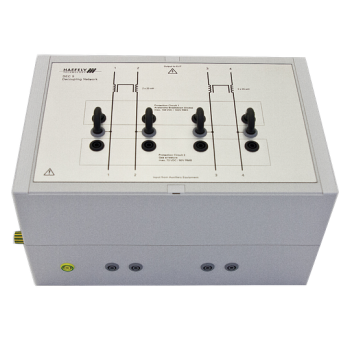
DEC 5 - 6.6 kV Decoupling Network for Symmetrical Lines
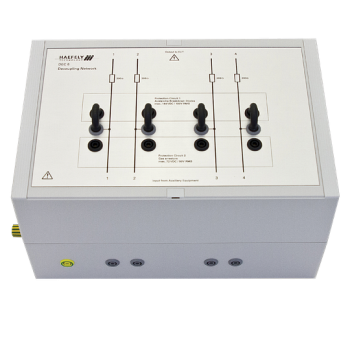
DEC 6 - 6.6 kV Decoupling Network for Symmetrical Lines
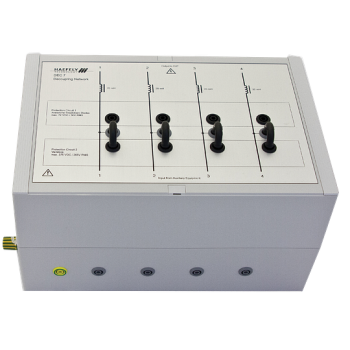
DEC 7 - 6.6 kV Decoupling Network for Asymmetrical Lines
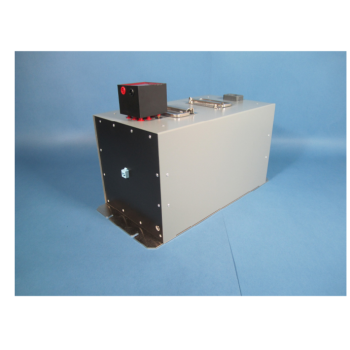
PCD-1000-4 - 4 kV Gigabit Ethernet and PoE Surge CDN
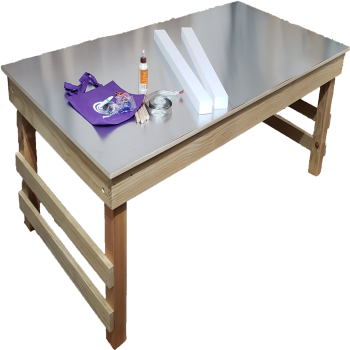
ESD Test Table Kit

ESD-Static Dissipation Brush, referenced in EN 61000-4-2

EMC EPS Block - 10 x 10 x 5 cm, EUT support

EMC PLA Block Lab kits, 10 x 10 x 5 cm
Products
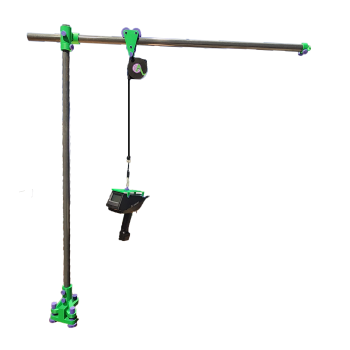
Absolute EMC, A-ESD Balancer Support Arm
Support arm with balancer for ESD test station
- The only support arm is made from non-metal
- 1.5" Fiberglass Tubes,
- 3D Printed: Cage, holder, base
- Custom ESD simulator adaption
- Balancer is plastic housing and string (only the spring is metallic)
- Only the system meets the metal-free area requirements of standards
- Support arm with the carriage
- 360 degrees pivotable
- Customized attachment to the table included
FP-COMB 63 / 125 / 200 A - 690 V AC Coupling / Decoupling Networks
Automated transient testing for single- and three-phase AC power lines.
The Haefely FP-COMB /690-1 family combines surge, ring-wave and EFT/burst coupling and decoupling in one AXOS-controlled network. Choose 63, 125 or 200 A for AC-powered equipment up to 690 V. Limited DC operation is also specified: 110 V DC for the 63 A model and 200 V DC for the 125 A and 200 A models.
63 / 125 / 200 A | 7 kV surge and ring wave | 5 kV EFT/burst
PCD 121 - 6.6 kV Surge Coupling Network for Symmetrical Lines
Combination-wave surge coupling for balanced data and control lines.
The Haefely PCD 121 applies 1.2/50 us - 8/20 us combination-wave impulses up to 6.6 kV to unshielded symmetrical data and signal lines. It handles two pairs or four wires simultaneously, with manual selection of common-mode and differential-mode coupling. Decoupling is provided separately to suit the equipment under test.
PCD 126A - 6.6 kV Surge and Ring-Wave Coupling Network
Surge coupling for unbalanced lines, plus ring-wave coupling for balanced and unbalanced lines.
The Haefely PCD 126A couples combination-wave surge and 100 kHz ring-wave disturbances onto up to four unshielded data or control wires at 6.6 kV peak. Combination-wave testing is for asymmetrical lines; ring-wave testing supports both symmetrical and asymmetrical lines. Coupling elements and paths are selected manually, with decoupling supplied separately.
DEC 5 - 6.6 kV Decoupling Network for Symmetrical Lines
20 mH current-compensated inductors for symmetrical signal-line testing.
The Haefely DEC 5 separates auxiliary equipment from an EUT during transient immunity testing on unshielded symmetrical lines. It supports up to four wires and impulses up to 6.6 kV, using 20 mh current-compensated inductors; two inductors with two coils each. Coupling is performed by a separate network, allowing protection and decoupling to match the signal circuit.
DEC 6 - 6.6 kV Decoupling Network for Symmetrical Lines
200 ohm resistors for symmetrical signal-line testing.
The Haefely DEC 6 separates auxiliary equipment from an EUT during transient immunity testing on unshielded symmetrical lines. It supports up to four wires and impulses up to 6.6 kV, using 200 ohm resistors. Coupling is performed by a separate network, allowing protection and decoupling to match the signal circuit.
DEC 7 - 6.6 kV Decoupling Network for Asymmetrical Lines
20 mH inductors, not current-compensated for asymmetrical signal-line testing.
The Haefely DEC 7 separates auxiliary equipment from an EUT during transient immunity testing on unshielded asymmetrical lines. It supports up to four wires and impulses up to 6.6 kV, using 20 mh inductors, not current-compensated. Coupling is performed by a separate network, allowing protection and decoupling to match the signal circuit.
PCD-1000-4 - 4 kV Gigabit Ethernet and PoE Surge CDN
Combined surge coupling and decoupling for active Gigabit Ethernet and PoE.
The PCD-1000-4 high-speed data-line CDN applies common-mode 1.2/50 us - 8/20 us surges to balanced telecommunications circuits up to 1000Base-T while decoupling auxiliary equipment. It supports IEEE 802.3af PoE and non-PoE configurations, with a maximum 4 kV surge test voltage.
ESD Test Table Kit
The ESD Test Table Kit is a simple inexpensive solution for your ESD testing. Complies to the requirements of IEC 61000-4-2 and can be used for additional standards. Comes with a Horizontal Coupling Plane (HCP), resistive cable to tie HCP to floor ground plane, bleeder wire for discharging ungrounded battery powered EUTs, 0.05mm insulator and an alternative low impedance ground for using the table for additional setups such as IEC 61000-4-6 requirements.
ESD-Static Dissipation Brush, referenced in EN 61000-4-2
Static Dissipation Brush is designed to meet section 7.2.4.1 of EN 61000-4-2: 2009. It is used to dissipate the charge on ungrounded equipment being tested.
EMC EPS Block - 10 x 10 x 5 cm, EUT support
The original EMC EPS Block is white Expanded Polystyrene can optional be covered in a vinyl covering on top and sides or with a painted coating to extend durability. They come in dimensional metric sizes of 10 x 10 x 5 cm. Keep your test setup looking professional with these lightweight and soft EUT supports. Ideal for use in EMC testing for EUT and cable supports. The EMC EPS Block is crush resistance able to withstand heavy weight loads without deforming. 1cm marking on 6 sides allows for easy positioning and test setups. They are conveniently sold in kits in tote bins for secure storage.
EMC PLA Block Lab kits, 10 x 10 x 5 cm
- 10 × 10 × 5 cm blocks — Modular dimensions for positioning EUTs and supporting cables.
- Durable PLA construction — Lightweight, 3D-printed blocks designed for repeated laboratory use.
- Stackable, interlocking design — Configure support heights and footprints to suit your setup.
- 1 cm markings on all four sides — Convenient reference points for consistent positioning.
- Integrated hooks and pass-throughs — Secure cables or connect blocks using rubber bands, zip ties, or hook-and-loop straps.
- Crush-resistant construction — Supports equipment while resisting deformation.
- Wipe-clean surfaces — Easy maintenance between tests.
- Plastic tote storage included — Keeps blocks organized and ready for use.
- Purple or green color options — Custom colors available, subject to material availability.