Streamlining MIL-STD-461 Conducted Susceptibility Testing
Streamlining MIL-STD-461 Conducted Susceptibility Testing
How a Unified, Automated Architecture Reduces Setup Time, Improves Repeatability, and Lowers Total Cost
MIL-STD-461G—and the anticipated updates in Revision H—place increasing emphasis on repeatable, well-documented, and efficiently executed susceptibility testing. As electronic systems become faster, denser, and more software-dependent, transient and RF-coupled disturbances are now among the most common root causes of field failures. Consequently, conducted susceptibility methods such as CS116, CS115, and CS114 are no longer occasional qualification checks; they have become daily tools for design verification and troubleshooting.
Yet many laboratories still approach these tests as independent procedures, assembling separate hardware chains for each requirement. While this traditional method satisfies the letter of the standard, it often introduces unnecessary setup time, configuration variability, and operator dependency. These inefficiencies accumulate rapidly in high-utilization environments, increasing both cost and risk.
A more effective approach is to treat MIL-STD-461 conducted susceptibility testing as a unified measurement workflow built on shared hardware, automated calibration, and consolidated control.
The Central Role of CS116, CS115, and CS114
Within MIL-STD-461G, three tests account for the majority of conducted immunity activity: CS116, CS115, and CS114. Together they represent the dominant real-world disturbance mechanisms experienced by cables and harnesses in military and aerospace platforms.
CS116 evaluates damped sinusoidal transients injected onto cables. These ringing bursts simulate lightning coupling, inductive switching events, and cable resonance phenomena that occur in long harnesses. In practice, this test is often responsible for uncovering intermittent resets and unexplained upsets that only appear during field operation. Because multiple discrete frequencies must be applied, the procedure can become time-consuming when hardware or calibration setups change between runs.
CS115 focuses on fast impulse excitation. It introduces very fast rise-time transients that resemble electrostatic discharge coupling and high-speed switching edges. These disturbances frequently upset modern digital electronics, producing bit errors or processor crashes that are difficult to diagnose. The test demands careful waveform verification and consistent probe placement, making it particularly sensitive to operator technique.
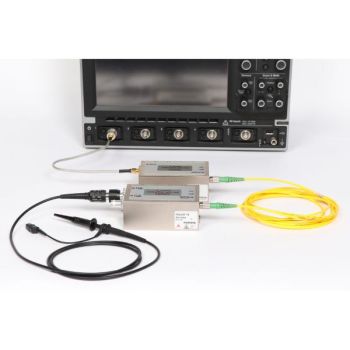
CS114 applies continuous RF current injection across a broad frequency range. It represents energy coupled from radios, transmitters, and antennas into cable bundles. In today’s RF-dense environments, this test has become essential for validating communication robustness. However, the need for amplifiers, directional couplers, monitoring probes, and level calibration often leads to complex and frequently reconfigured setups.
Although these tests differ in waveform characteristics, they share nearly identical physical infrastructure: generators, injection devices, monitoring probes, loads, and measurement instrumentation. Maintaining separate configurations for each method therefore duplicates hardware and multiplies opportunities for error without improving technical quality.
Why Traditional Setups Create Inefficiency
In many facilities, technicians must physically reconfigure the bench between CS116 (for each frequency change), CS115, and CS114. Cables are moved, attenuators are swapped, outputs are rerouted, and calibration fixtures are reconnected. Each transition introduces three problems.
- First, time is lost. Even a conservative 10–20 minutes per changeover quickly accumulates when multiple tests are run daily.
- Second, repeatability suffers. Each reconnection slightly alters impedance and coupling, making correlation between runs more difficult.
- Third, mistakes occur. Incorrect routing, missed loads, or misconfigured instruments often result in retesting or questionable data.
None of these issues stem from the standard itself; they arise from how the hardware is organized.
The Case for a Unified Architecture
A consolidated susceptibility platform addresses these inefficiencies by minimizing physical changes and automating verification steps. Instead of building separate stations for each method, the system maintains a common signal path that supports multiple tests through software-controlled routing and parameter selection.
In practice, this means that the same injection device and monitoring arrangement can remain connected while the source waveform changes electronically between damped sinusoids, impulses, or RF signals. Calibration routines are executed automatically, with levels measured and adjusted under software control rather than manually interpreted on an oscilloscope. Test sequences are scripted so that each run follows the same steps regardless of operator.
The technical benefits are immediate. Setup time decreases because hardware remains fixed. Measurement uncertainty decreases because impedance and geometry remain consistent. Operator variability is reduced because fewer manual adjustments are required.
The result is a test bench that behaves more like a calibrated instrument and less like a manually assembled collection of components.
Side-by-Side Comparison
| Factor | Traditional Setup | Unified Automated Setup |
| Cable changes per test | Multiple | None |
| Calibration | Manual | Automated |
| Setup time | 10–30 min | 2–5 min |
| Operator dependency | High | Low |
| Repeatability | Moderate | High |
| Throughput | Limited | High |
| Error risk | Frequent | Minimal |
| Long-term cost | High | Lower |


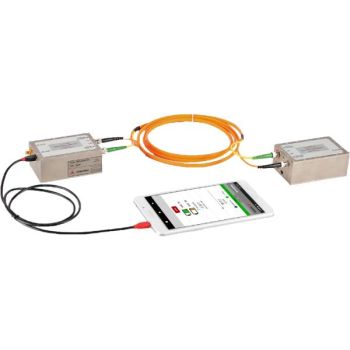
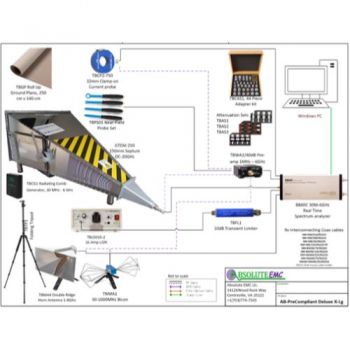
Calibration Setup CS116/115/114 Test Setup CS116/115/114
Quantifying the Time Savings
Even modest reductions in preparation time translate into substantial cost savings.
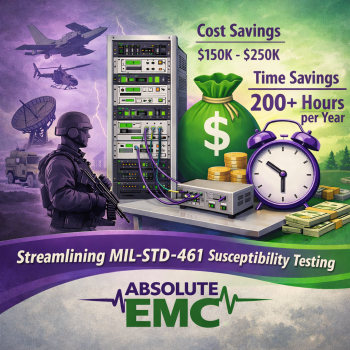
Consider a laboratory running CS116 (X 6 Frequency steps), CS115, and CS114 daily. If each test requires just 20 minutes of manual reconfiguration, that amounts to 160 minutes of non-productive time per day. Over a typical year:
160 minutes × 100 days of testing over a year = 267 hours
(100 days of testing estimation, depending on the workload)
If engineering labor costs range between $150 and $250 per hour, this lost time represents:
$40,050–$66,750 per year
If a unified, automated system reduces this overhead to 5 minutes per test, more than 200 hours annually are recovered. Over a five-year period, savings can exceed $150,000–$250,000—often more than the initial capital cost of the system itself.
This calculation excludes additional savings from reduced retesting, fewer setup mistakes, and improved throughput, which further increase the return on investment.
Extending the Concept Across All Conducted Tests
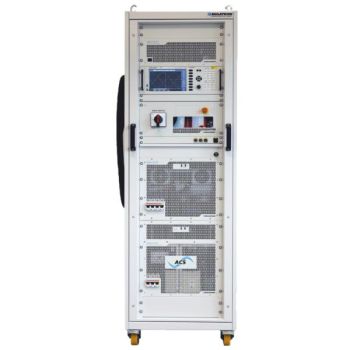
Once a unified architecture is established for CS116, CS115, and CS114, expanding capability becomes straightforward. Additional conducted tests can be incorporated within the same rack and control framework.
Low-frequency ripple testing (CS101), structure current testing (CS109), and magnetic field immunity (RS101) can share common instrumentation and automation. Legacy transient methods such as CS106 can also be accommodated with appropriate coupling networks. Housing these functions in a single integrated rack eliminates redundant hardware and further simplifies the lab environment.
The advantage is not only reduced footprint but also procedural consistency. Operators interact with one system and one software interface, regardless of which susceptibility method is selected.
Technical and Operational Benefits
Beyond time savings, the unified approach improves overall test quality. Stable signal paths provide better repeatability and correlation between pre-compliance and formal qualification. Automated calibration ensures accurate stress levels. Reduced handling decreases wear on probes and connectors, lowering maintenance requirements. Training new personnel becomes easier because fewer configuration steps must be learned.
Most importantly, engineers can focus on evaluating device performance rather than troubleshooting the test bench.
Conclusion
MIL-STD-461G and the forthcoming Revision H continue to emphasize comprehensive susceptibility testing, particularly in the areas addressed by CS116, CS115, and CS114. As these methods become routine rather than occasional, the inefficiencies of manually reconfigured benches become increasingly costly.
A simplified, automated, and unified test architecture transforms susceptibility testing from a labor-intensive procedure into a streamlined measurement process. By consolidating hardware, standardizing signal paths, and automating calibration, laboratories can reduce setup time, minimize errors, improve repeatability, and significantly lower operating costs.
For facilities that run conducted susceptibility tests regularly, the question is no longer whether simplification helps—it is how long they can afford to operate without it.