CDN M-type - Mains / Power supply applications
CDN S-type - Screened cables
CDN AF-type - Unscreened unbalanced lines
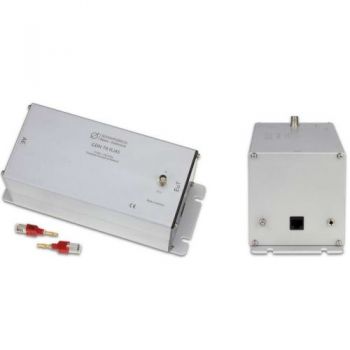
CDN T-type - Unscreened balanced lines
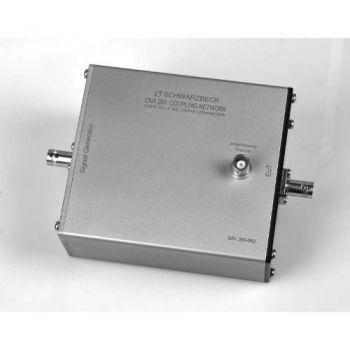
CNA 280 A-Type CDN for coaxial antenna inputs
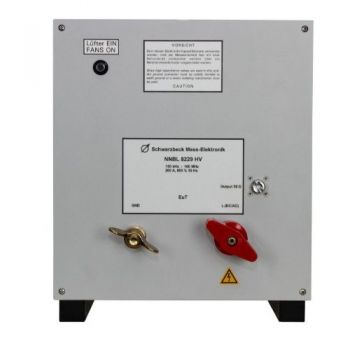
NNBL 8229-HV, 9 kHz - 100 MHz, 200A, 50µH Single Path LISN
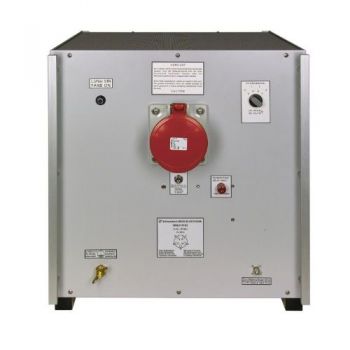
NSLK 8163, 9 kHz - 30 MHz, 400V / 63A, 50 µH, 4 Path LISN
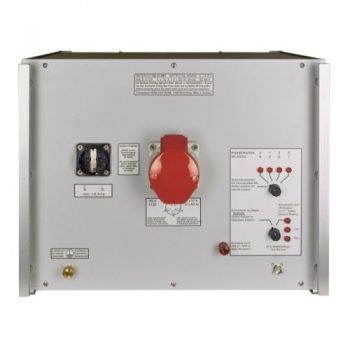
NSLK 8128, 9 kHz - 30 MHz, 250V / 32A, 50 µH, 4 Path LISN
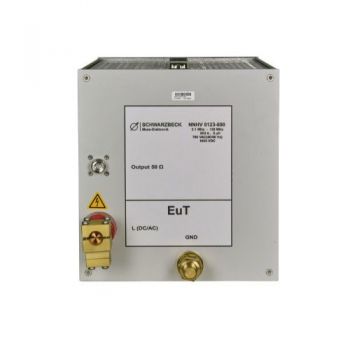
NNHV 8123-800, 0.1 - 150 MHz, High Voltage, 800A, single path, Automotive LISN
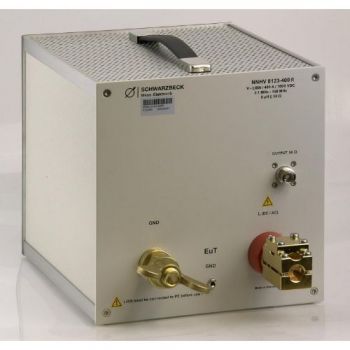
NNHV 8123-400R, 0.1 - 150 MHz, High Voltage, 400A, single path, Automotive LISN
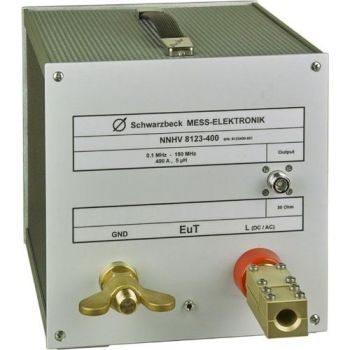
NNHV 8123-400, 0.1 - 150 MHz, High Voltage, 400A, single path, Automotive LISN
Products
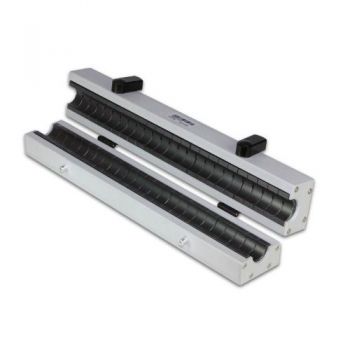
CMAD 1614, 10 - 1000 MHz, Common Mode Absorption Device
- Common-Mode Absorbing Clamp
- (10) 30 - 200 (1000)MHz
- Suppress unwanted common mode currents
- Cable bundles maximum diameter of 26 mm
- acc. CISPR 16-1-4
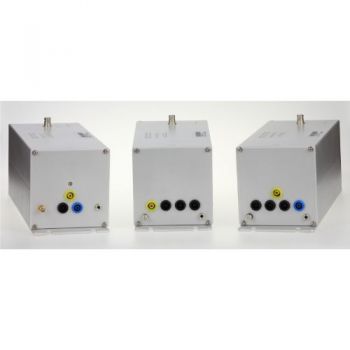
CDN M-type - Mains / Power supply applications
The Coupling- / Decoupling Networks are used to inject common-mode disturbances to Equipment under Test (EuT). Further, the CDNs provide sufficient decoupling between Auxiliary Equipment (AE) and disturbance signal. The requirements for CDN and their application are described in the standard IEC 61000-4-6 (Immunity to conducted disturbances, induced by radio-frequency fields). CDNs have a common mode impedance of 150 Ohm and are available for a multitude of cable types and connectors.
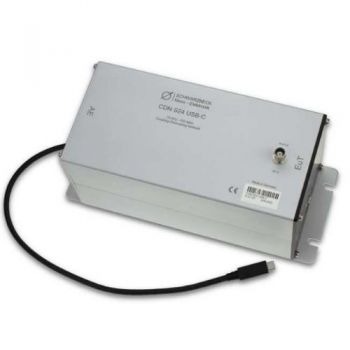
CDN S-type - Screened cables
The Coupling- / Decoupling Networks are used to inject common-mode disturbances to Equipment under Test (EuT). Further, the CDNs provide sufficient decoupling between Auxiliary Equipment (AE) and disturbance signal. The requirements for CDN and their application are described in the standard IEC 61000-4-6 (Immunity to conducted disturbances, induced by radio-frequency fields). CDNs have a common mode impedance of 150 Ohm and are available for a multitude of cable types and connectors.
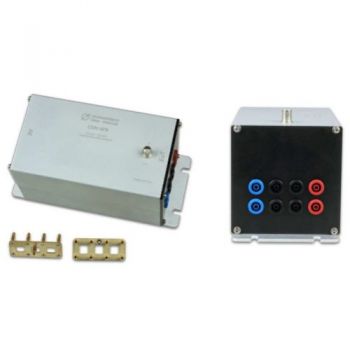
CDN AF-type - Unscreened unbalanced lines
The Coupling- / Decoupling Networks are used to inject common-mode disturbances to Equipment under Test (EuT). Further, the CDNs provide sufficient decoupling between Auxiliary Equipment (AE) and disturbance signal. The requirements for CDN and their application are described in the standard IEC 61000-4-6 (Immunity to conducted disturbances, induced by radio-frequency fields). CDNs have a common mode impedance of 150 Ohm and are available for a multitude of cable types and connectors.
CDN T-type - Unscreened balanced lines
The Coupling / Decoupling Networks are used to inject common-mode disturbances to Equipment under Test (EuT). Further, the CDNs provide sufficient decoupling between Auxiliary Equipment (AE) and disturbance signal. The requirements for CDN and their application are described in the standard IEC 61000-4-6 (Immunity to conducted disturbances, induced by radio-frequency fields). CDNs have a common mode impedance of 150 Ohm and are available for a multitude of cable types and connectors.
CNA 280 A-Type CDN for coaxial antenna inputs
The CNA280 meets the specifications of the standard CISPR 16-1-2 A1, figure C1 (unit type A) and CISPR 16-1-3, app. B,Fig. 9. It is also required to calibrate EMI absorbing clamps like the MDS 21.
NNBL 8229-HV, 9 kHz - 100 MHz, 200A, 50µH Single Path LISN
- Measurement of interference for MIL-STD-461/462
- 9 kHz - 100 MHz
- 1000VDC / 800VAC 50/60Hz
- Max current 200A
- Impedance of each path: 50 µH +5 Ω || 50 Ω ±20 %
NSLK 8163, 9 kHz - 30 MHz, 400V / 63A, 50 µH, 4 Path LISN
- High Current 4 path LISN (3-Phase)
- Line Impedance Stabilisation Network
- Connector: CEE plug (IEC 60309)
- 9 kHz to 30 MHz
- 400/700 VAC, 630 VDC, 63 A
- (50 µH+5 Ω) || 50 Ω
- CISPR 16-1-2
NSLK 8128, 9 kHz - 30 MHz, 250V / 32A, 50 µH, 4 Path LISN
- High Current 4 path LISN (3-Phase & Single-Phase)
- Line Impedance Stabilisation Network
- Connector: CEE plug (IEC 60309) & CEE 7/4
- 9 kHz to 30 MHz
- 250/400 VAC, 400 VDC, 32 A (16A for CEE 7/4)
- (50 µH+5 Ω) || 50 Ω
- CISPR 16-1-2
NNHV 8123-800, 0.1 - 150 MHz, High Voltage, 800A, single path, Automotive LISN
- Acc. to CISPR 25 Ed. 4 or BMW GS 95025-1
- impedance (5µH) || 50 Ohm
- 800 A, 1000 V (DC)
- Backside with built-in 0.1 microfarad capacitor to ground
- N-jack
NNHV 8123-400R, 0.1 - 150 MHz, High Voltage, 400A, single path, Automotive LISN
- Acc. to CISPR 16-1-2, CISPR 25 Ed. 4 or BMW GS 95025-1
- impedance (5µH) +1 Ohm || 50 Ohm
- 400 A, 1000 V (DC)
- Backside with built-in 0.1 microfarad capacitor to ground
- Switchable 1 microfarad on the backside Acc: ECE R10.06, CISPR 12 and PSA
- N-jack
NNHV 8123-400, 0.1 - 150 MHz, High Voltage, 400A, single path, Automotive LISN
- Acc. to CISPR 25 Ed. 4 or BMW GS 95025-1
- impedance (5µH) || 50 Ohm
- 400 A, 1000 V (DC)
- Backside with built-in 0.1 microfarad capacitor to ground
- N-jack