ESD - Generators verified according to the standard International Electro technical Commission 61000-4-2, ISO 10605 and other. The measurements of the single pulses take place with a special 2 ohm shunt. For the correct verification of the ESD impulses an oscilloscope is necessary with a minimum bandwidth of - 2 GHz acc. IEC 61000-4-2, 2008 and - 1 GHz acc. ISO 10605, 2008. The ESD verification set SESD 8800-4 works up to 4 GHz and fulfilled the request of the double bandwidth regarding to the measurement bandwidth.
The ESD-Sense has been developed with EMC test laboratories in mind to enable a “go / no-go” verification of the ESD generator output prior to test.
The Microsoft-Windows based software controls the ESD generator via a serial interface
IEC / EN 61000-4-2 The test generator SESD 230 simulates electrostatic discharge as defined in the standard IEC / EN 61000-4-2. Depend on the Equipment Under Test (EUT) and the test set-up for laboratory tests the IEC standard shows two test methods; Test voltage max. 30,0 kV AIR und CON; Discharge impedance 150pF/330 Ohm (IEC); Battery or mains operation; Predefined tests, standard and other
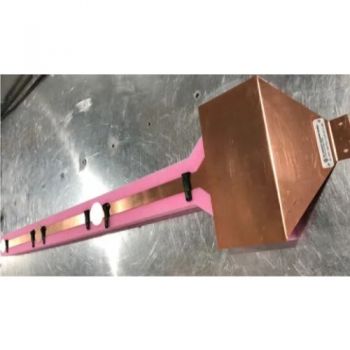
For automotive ESD testing. The jig uses precision laser cut copper and CNC cut foam to meet the exact dimensional requirements of ISO 10605 Annex F.
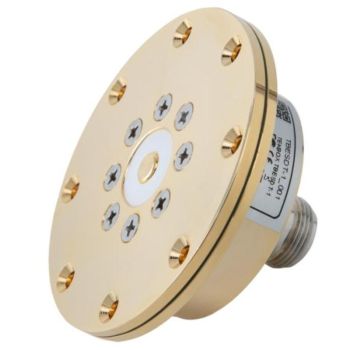
The TBESDT1 ESD-Target is a current sensing transducer to verify ESD-Simulators. It is used to take measurements compliant with IEC 61000-4-2 up to 4 GHz.

The ESD simulator SESD 30000 is suitable for EMC testing of systems and equipment in accordance with standard IEC / EN 61000-4-2, ISO 10605 (Automotive), MIL-STD and other. The modular structure of the simulator allows further testing according to different standards and customer definitions. Test voltage max. 30,0 kV AIR and CON; Discharge impedance IEC, ISO, MIL etc.; Modular structure, self-test; Automatic charge absorber integrated;
IEC / EN 61000-4-2 The test generator SESD 216 simulates electrostatic discharge as defined in the standard IEC / EN 61000-4-2. Depend on the Equipment Under Test (EUT) and the test set-up for laboratory tests the IEC standard shows two test methods; Air discharge (AIR) and Contact discharge (CON); Test voltage max. 16,5 kV AIR, max. 10,0 kV CON; Discharge impedance 150pF/330 Ohm (IEC); Battery or mains operation; Predefined tests - standard and other